

art direction, edit, titles
Latest Posts
art direction, copy, culture jamming, experiential, social
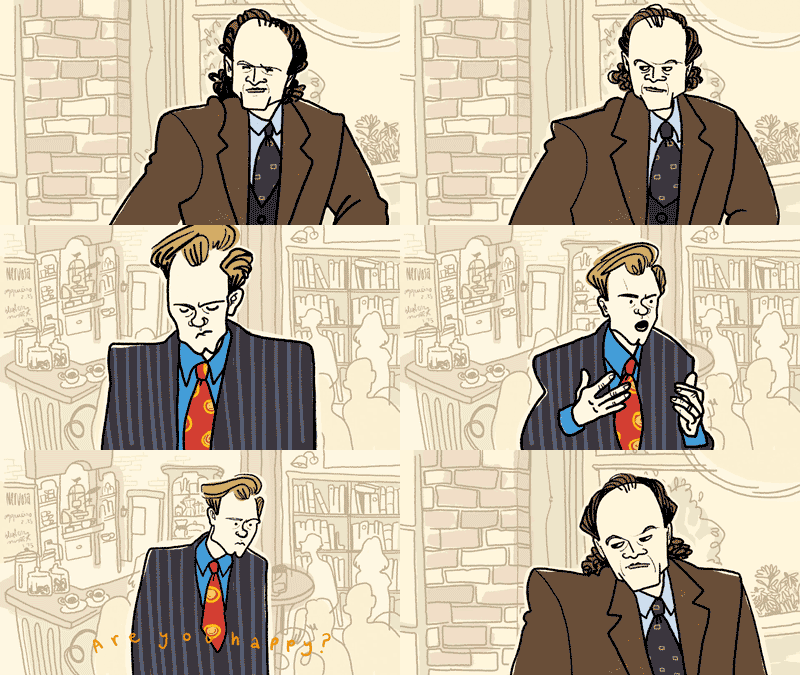
Our Frasier Remake
art direction, copy, culture jamming, experiential, social
Our Frasier Remake
As the editor (and creator) of Our Frasier Remake, I assembled and shaped a completely unique, shot-for-shot recreation of the Frasier pilot — constructed from more than 180 segments submitted by artists, animators, and filmmakers around the world. Each scene was interpreted in a radically different style, and my job was to bring them together into a cohesive, emotionally faithful, and rhythmically watchable episode.
Editing this project involved far more than stitching scenes together. I structured the full-length film for narrative and comedic flow, balanced wildly varied visuals, and maintained character and story continuity across dozens of artistic tones. I also mixed a completely original audio track using improvised jazz drumming (a la Birdman to mimic the rise and fall of the original laugh track), sound effects, and new vocal performances from actors including Lauren Lapkus, James Adomian, and two-time Emmy winner Eric Bauza. Sound design, comedic timing, and voice delivery all had to feel organic, despite coming from dozens of disconnected sources.
In addition to the film itself, I also cut multiple punchy trailers and teaser spots that helped establish the project’s identity and build momentum in the press. I also mastered a theatrical version that screened to sold-out audiences in Los Angeles, New York, San Francisco, and Austin. Those screenings expanded the presentation to include ‘making of sizzles,’ behind the scenes clips, and shorts from various creators on the project.
We released the full project the day before Paramount+ debuted their official reboot of Frasier, positioning our chaotic, lovingly crafted indie version as a kind of fan-powered counterpoint — and generating wide attention in the process. The film was covered by TheWrap, AV Club, ScreenRant, LAist, and Cracked, with AV Club calling it “a unique and entirely D.I.Y. take on television’s greatest snob” and Cracked headlining, “Crowdsourced Frasier Reboot Looks Way Cooler Than Real One.”
This was one of the most complex editorial challenges I’ve taken on — a massive puzzle of formats, tones, and styles — and the result is a singular, collaborative work that I’m proud to have shaped from raw chaos into something truly watchable, funny, and culturally resonant.
View Project


art direction, Creative Direction, social
Seinfeld

art direction, Creative Direction, social
Seinfeld
I had the exciting opportunity to lead the new business pitch for the iconic TV show Seinfeld, securing the account and executing the first month of creative for its social channels in syndication for our partner, Sony Pictures. Being a huge fan of the show, I drew upon my personal passion and knowledge as a super fan to craft an authentic approach. My key insight was that Seinfeld, often dubbed “the show about nothing,” predated and embodied internet culture by transforming everyday social observations into memorable characters, catchphrases, and memes. I envisioned that following Seinfeld on social media should evoke the feeling of sharing favorite moments with friends.

To modernize the show’s graphic identity, I tapped into the resurgence of “Memphis style,” a design trend popular in the 1980s and 90s that coincidentally aligned with the aesthetic of the Seinfeld logo. This connection allowed us to create a vibrant, modern graphic identity that remained true to the show’s essence. We developed a clear visual strategy, positioning still images within contemporary contexts, harnessing the show’s unique voice for our social messaging, and establishing repeatable frames to ensure consistency amidst variation.
The impact of our creative strategy was significant. Over the first month, Seinfeld‘s social channels experienced a remarkable increase of 250,000 Instagram followers and a 300% surge in organic engagement. This campaign revitalized the show’s presence on social media and reinforced its timeless relevance in today’s digital landscape.


art direction
Prank Panel Opening Titles

art direction
Prank Panel Opening Titles
Opening titles for the Funny or Die / TruTV pilot Prank Panel, with Trevor Moore. When MADtv’s creators and executive producers teamed up with Funny or Die for a new prank/panel hybrid show they tapped my creative firm, Ogmog to establish the tone in an opening title sequence and graphics pacakge.
Working with Illustrator/animator Jesse Benjamin, I creative directed and art directed the project. We created a 15 second opening title sequence with style guide and drop zones for future episodes, as well as intro & outro bumpers, lower thirds and a mortise.
For the score, I brought in composer Danny Walter. Our first round of creative started as an informal conversation with the show’s star and executive producer Trevor Moore, motion graphic designer Jesse Benjamin and myself at a picnic table in the backyard of the Funny or Die offices. We discussed the challenge at hand: coming up with a captivating and immediately recognizable graphics package for the pilot.

The twist was the format: this prank show was couched in a late night panel show format. Our job was to bridge the gap between the “anything goes” nature of a prank show with the grounded and cool style of a late night talk show.
Our launching point was thinking about the flat colors, sunset hues, and bold confident typography of our favorite late night shows. We kept the sexy dusk colors, but needed to find a design element that communicated the run-and-gun feel of a prank show. That’s where the tactile grunge, stains, and other distress came in. Light leaks were also a great way to add an organic element to the slickness of late night talk shows. Word bubbles were used as a design element to carry the weight of moving us from guest to guest and supporting the typography. They also aligned with the format of a talk show where some of the biggest laughs came from Trevor and his guests – great comedians like Pete Holmes – talking about the pranks he had done, which honestly were funny enough on their own.


Deliverables were show logo, opening titles, lower thirds, transitional bumpers, mortise, etc. Unlike a typical prank show, the opening titles needed to be flexible to include rotating guests each episodes, which meant the final deliverables couldn’t be a baked video sequence, but had to be clearly organized and labled for an in house post team to adapt each episode.